
Main Content

This set of presentations will explore what artificial intelligence is, how it operates, and how it impacts our daily lives. It will also explore what data centers are, what it means to host artificial intelligence in our communities, and what is involved with data center operations.

Tim Marczewski serves as Director of Artificial Intelligence and Innovation for the State of Missouri within the Missouri Office of Administration, where he helps guide the responsible use of artificial intelligence to improve public service. In this role, he works with state leaders and teams to assess needs, identify practical AI tools, and support implementation with a focus on ethics, security, and effectiveness.

Before joining the State of Missouri, Tim spent more than two decades in federal service as a military engineer and space operations officer. His career included leadership roles with the U.S. Army Corps of Engineers, U.S. Army Space and Missile Defense Command, and the National Reconnaissance Office, where he led a 100-member applied research group.

Tim holds a Bachelor of Science from Purdue University, a Master of Science in Engineering Management from Missouri University of Science and Technology, and a Master of Science in Space Systems Operations from the Naval Postgraduate School.
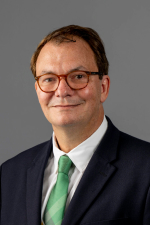
Amaury Lendasse is Chair of the Department of Engineering Management and Systems Engineering and the Bernard R. Sarchet Professor at Missouri University of Science and Technology. His work focuses on artificial intelligence, machine learning, data science, explainable AI, and the use of AI for engineering decision-making, cybersecurity, infrastructure, and complex systems. He has published extensively in these areas, with more than 11,000 Google Scholar citations and an h-index of 52.

He has also been recognized among the Stanford/Elsevier Top 2% Scientists. In addition to his academic work, Dr. Lendasse collaborates with industry and startups on applied AI innovation, including cybersecurity, AI governance, and agentic AI. One example is his collaboration with Aiceberg, an AI security startup recently acquired by Cranium AI as part of its effort to create the largest independent scaled platform to secure and govern the evolution of agentic enterprise systems.

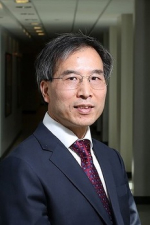
Dr. Genda Chen is Professor and Abbett Distinguished Chair in Civil Engineering and Director of the Center for Intelligent Infrastructure at Missouri S&T. He has authored or co-authored over 550 technical publications in structural health monitoring (SHM), structural control, computational and experimental mechanics, life-cycle assessment and deterioration mitigation of infrastructure, and multi-hazards assessment and mitigation. He delivered 29 keynote/invited presentations at international conferences and workshops. He chaired the 9th International Conference on Structural Health Monitoring of Intelligent Infrastructure (SHMII-9), St. Louis, Missouri, August 4–7, 2019. He is a fellow of five professional organizations, including the American Society of Civil Engineers (ASCE) and the International Society of Civil Structural Health Monitoring (SCSHM). He received the 2025 ASCE Charles Pankow Award for Innovation, the 2025 SCSHM Aftab Mufti Lifetime Achievements Award, the 2019 SHM Person of the Year Award from the International Workshop on Structural Health Monitoring, and the 1998 National Science Foundation CAREER Award.

Dr. Chen has been a Missourian for 30 years. Before joining Missouri S&T, Dr. Chen was a consulting engineer in New York City, practicing bridge design, inspection, and construction project monitoring for over three years. He has extensive academic and industrial experience. In the area of AI, Dr. Chen was trained in 1990 with rudimentary programming in logic for natural language processing. He published his first journal paper in Engineering Application of Artificial Intelligence in 2004 and has published more than 20 papers in recent years. He integrated AI, robotics, and virtual reality into an award-winning automated inspection platform to address accessibility, consistency, efficiency, and safety in large-scale civil infrastructure.